JBS Reports Record Net Sales in the Second Quarter of 2026
10 | 08 | 2026

Gilberto Xandó presented JBS' initiatives to expand food production in an increasingly sustainable way at the Beijing event. Outlining JBS’ circular economy approach, he said:"Increasing sustainability means increasing efficiency, our ability to produce the maximum of items essential to life with the minimum of natural resources.
26 | 04 | 2023
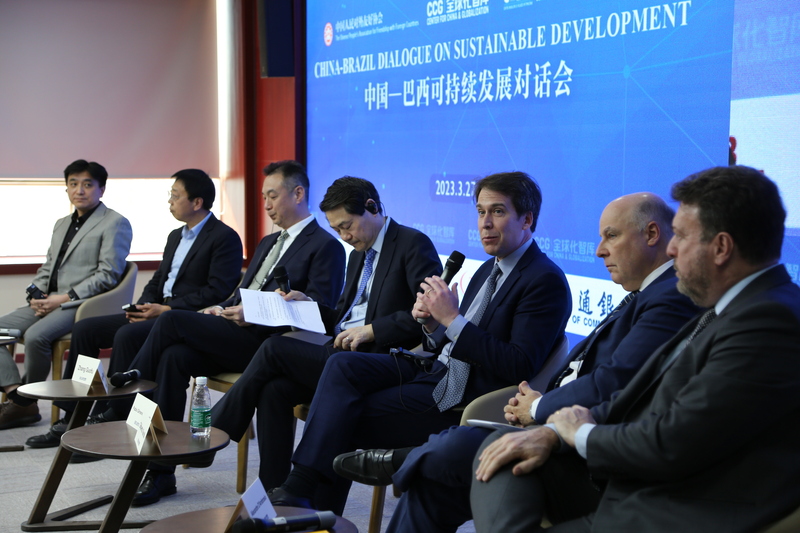
The president of JBS Brazil, Gilberto Xandó, discussed solutions to expand food production so as to meet the demand of an increasing world population, and at the same time curb global warming. As one of the speakers at the China-Brazil Dialogue on Sustainable Development, held in Beijing, the executive emphasized the Company’s responsibility towards this challenge, as one of the largest food companies in the world. “We are doing our part in confronting climate change,” said Xandó.
The event was organized by Cebri (Portuguese acronym for the Brazilian Center for International Relations), by CCG (Center for China and Globalization), and by CPAFFC (Chinese People’s Association for Friendship with Foreign Countries) in order to discuss the transition to a low carbon economy, having food and energy security as a background. The forum was attended by executives from other Brazilian and Chinese companies. Besides the food sector, the mining and cellulose sectors, among others, were represented.
The president of JBS Brazil highlighted the Company’s global investment in biodigesters for organic waste disposal in places like the United States, Canada, Australia and Mexico. In addition, he emphasized that the company has reached the capacity to make use of 99.61% of each cattle processed. “In addition to beef, we produce leather, organic fertilizer, soap, biofuel, collagen, and gelatin, among other products. Therefore, the same land that allowed us to raise the animal to generate food also generated clean energy, health and personal hygiene items, clothing, and agricultural inputs,” Xandó listed.
Last year, the company started two new businesses: Campo Forte, in the segment of organo-mineral fertilizers, and Genu-in, which operates in the production of collagen peptides and gelatin, both based on the use of residues from the JBS brand chain. “Increasing sustainability means increasing efficiency, our ability to produce the maximum of items essential to life with the minimum of natural resources,” said the president of JBS Brazil. China, with the mission to feed 1.4 billion people, shares this concept.
Beyond the factory gate, JBS invests in partnerships to introduce nutritional supplements that can significantly reduce enteric methane emissions from cattle. In addition, its satellite monitoring system for assessing all its cattle suppliers in Brazil covers an area three times the size of the UK on a daily basis. This system has already blocked more than 15,000 farms for not complying with the company’s socio-environmental criteria. The company also has Green Offices, which provide free technical assistance, and access to credit for cattle producers, aiming to increase productivity and improve their environmental practices. Almost 5,000 farms have already benefited from this service.
Two years ago, JBS was the first global company in the protein sector to commit to becoming Net Zero by 2040. Since then, the company has been mobilizing its teams worldwide and counting on specialized external consultants to build its roadmap consistent with the criteria established by the Science-Based Targets Initiative. The work includes scopes 1, 2 and 3, which address, respectively, direct emissions, those related to the electricity used by the Company, and those that occur along the value chain – from raw materials to product distribution.
“We need to produce more, as one third of the world’s population does not have adequate access to quality food, reducing our carbon footprint, as climate change causes severe impacts everywhere. At JBS, we believe it is indeed possible to face and overcome both challenges at the same time,” said Xandó.
Published by: JBS Brazil