2019
2025

At JBS, our sustainability framework is a disciplined, business-focused approach that reinforces the economic performance of our core operations, accelerates progress to improve efficiency and reduce waste, and helps to build long‑term resilience and mitigate food insecurity across our value chain. We produce affordable high-quality food products while striving to reduce waste, expand circular economy opportunities, and protect environmental quality.
Read about our latest performance in our JBS N.V. Non-Financial Disclosure Report.
2025 JBS N.V. Non-Financial Disclosure Report
Download
Our ambition is to help feed a growing world while endeavoring to reduce the environmental footprint of our operations and the broader food value chain. Our opportunity is to help address increasing global demand for protein responsibly, and we believe that effective management practices improve efficiency, enhance productivity, and transform waste streams into new co-products and renewable energy that contribute to long-term business success.
Our sustainability framework is built on three key pillars:
• Maintain Excellence
• Drive Progress
• Build Resilience
Responsible growth. Sustainable future.
Our Purpose: To feed a growing world responsibly and sustainably
Maintain ExcellencE
Building on strong foundations, prioritizing safety, integrity, and a culture of care, to protect our people and strengthen trust across our value chain.
Our Goals
Health & Safety: Improve Global Safety Index by 10% year over year
People Development: Continue providing life‑changing development and educational opportunities for team members and their families
Drive Progress
Accelerating near- and long-term climate, energy, and water initiatives to reduce environmental impact and strengthen resilience.
Our Goals
Climate (Near-term): Reduce Scope 1 & 2 emissions intensity (tCO₂e/t of finished product) by 30% by 2030 (2019 baseline)
Climate (Long-term): Reduce Scope 1 & 2 emissions intensity (tCO₂e/t of finished product) by 70% across JBS processing facilities by 2050 (2019 baseline)
Energy: Reach 60% renewable electricity by 2030
Water: Reduce water use intensity (m³/t of finished product) by 15% by 2030 (2019 baseline)
Build Resilience
Mitigating risk across the value chain through responsible sourcing, transparency, and supporting agricultural producers.
Our Goals
Supply Chain Resiliency: Support farmers with their adoption of regenerative practices, innovative technologies, and agronomic technical assistance to enhance productivity and mitigate GHG emissions
Supply Chain Transparency: Improve transparency of priority agricultural supply chains to address deforestation risks in Brazil
The interconnected challenges of climate change and food insecurity require bold action, innovation, and collaboration across industries, governments, and communities. At JBS, we are dedicated to advancing agriculture and food production systems to not only feed the world, but also to protect it. By partnering with farmers and ranchers, customers, researchers, policymakers, industry groups, and other stakeholders, we aim to develop solutions that balance sustainability with food production.
Around the world, JBS operations work to improve the efficiency of production while optimizing the use of natural resources and limiting our overall environmental footprint.
We monitor and manage key environmental aspects, including climate, energy, water, biodiversity, waste, and recycling. JBS also remains attentive to opportunities related to circular economy practices, seeking to optimize resource use and reducing environmental impacts.
JBS aims to tackle the causes of deforestation while balancing agricultural growth with environmental stewardship. We utilize a five-pronged approach to combating potential deforestation and advancing sustainable practices across our supply chain. This plan serves as a framework for developing a resilient food system that benefits farmers, communities, and the planet.

1
Responsible sourcing policies
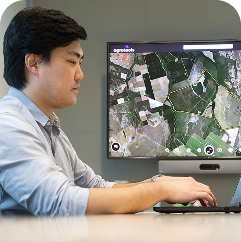
2
Supply chain monitoring
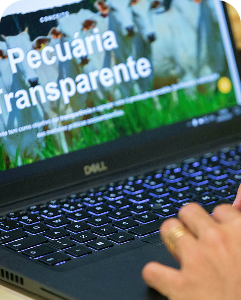
3
Environmental and technical assistance for producers
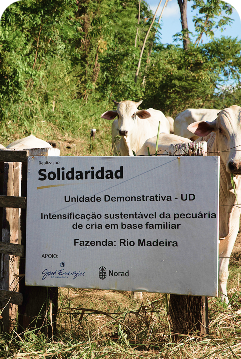
4
Multi-stakeholder engagement and collaboration to accelerate sectoral change
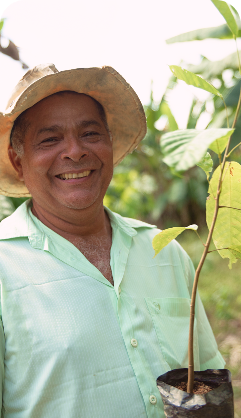
5
Promotion of sustainable development
We are progressively integrating circular economy principles, moving beyond traditional linear models to embrace closed-loop systems that reduce, reuse, recover, and recycle materials and energy. This strategic shift not only minimizes disposal, but also promotes value creation, unlocks new business opportunities, drives disruptive innovation, and strengthens the long-term resilience of our operations.
Over the last two decades, JBS has implemented a number of initiatives and launched new businesses to sustainably transform inedible byproducts produced in our operations into biodiesel, nutraceuticals, soaps, animal feed, and more. Packaging and organic waste generated during JBS processing is also transformed into new packaging for use at JBS operations and fertilizers for sale, respectively.
As a global leader in animal protein production, we recognize our significant responsibility to treat our animals with appropriate care. We are dedicated to promoting animal health and welfare through science-based standards that meet or exceed applicable laws and best practices. These standards are actively applied, monitored, and continuously improved across our operations and supply chains.
The health and safety of our team members is paramount. Across all regions, we integrate health and safety into our organizational fabric, tailoring strategies to local contexts while maintaining global standards. Our Team Member Health and Safety Global Policy serves as the foundation for our strategy and management approach, supporting alignment with applicable regulatory requirements in every country where we operate.