JBS Reports Record Net Sales in the Second Quarter of 2026
10 | 08 | 2026

As an alternative for emitting 80% less carbon dioxide, the biofuel showed promising rates in analyses conducted by JBS in partnership with DAF
15 | 02 | 2024
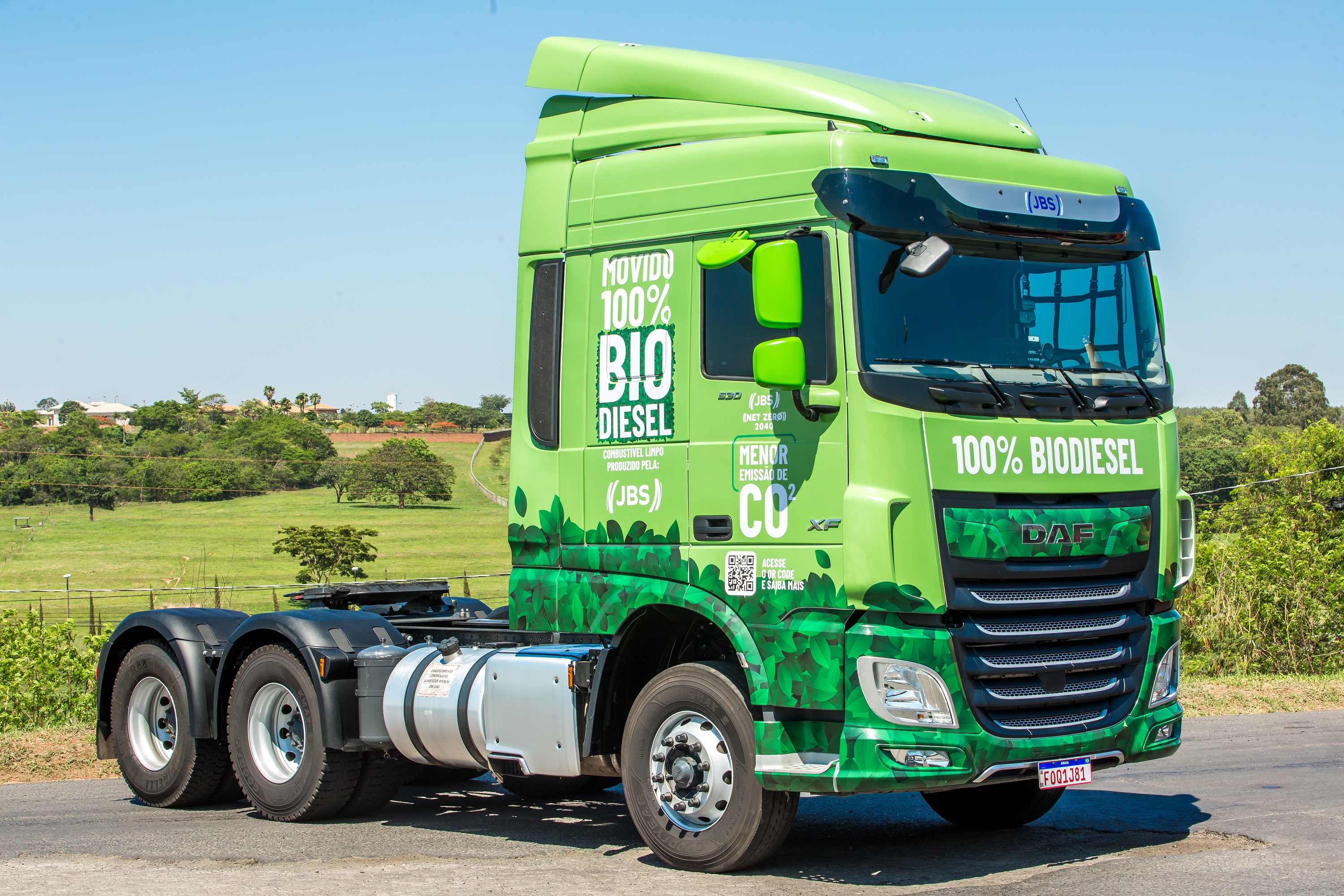
JBS reaffirms its commitment to reducing the carbon footprint of its operations and presents the results of the first phase of testing in the project for the use of 100% biodiesel (B100) in its truck fleet. Over the last six months, a DAF 530 truck from the Dutch manufacturer DAF was used by JBS Transportadora on the logistical route between Lins (SP) and the port of Santos, on the coast of São Paulo, and was exclusively fueled with biodiesel produced by JBS Biodiesel. The result showed that the vehicle fueled with 100% biodiesel (B100) had a performance equivalent to diesel and emitted up to 80% less carbon dioxide.
“It has been six months of operation and the results show that the use of B100 is promising. The initial results show that the performance of the vehicle fueled with biodiesel is equivalent to that used on the same route with conventional diesel, but with a much lower environmental impact,” explains Alexandre Pereira, commercial director of JBS Biodiesel.
The executive explains that biodiesel emits up to 80% less carbon dioxide than fossil diesel, making it a cleaner, biodegradable, and highly efficient fuel from an environmental standpoint. Furthermore, the tests showed that it is an immediate substitute for fossil fuel and compatible with the existing engine technology in the automotive industry. In other words, it is a practical, sustainable, and available option. These factors, among others, make a very relevant contribution to reducing emissions related to transportation. “Our goal is to prove the quality of biodiesel as an immediate alternative for the decarbonization of the energy matrix in Brazilian transportation,” comments Pereira.
Since the beginning of the test in July 2023, the truck has covered a total of 59,938 km (approximately 37,260 miles), transporting more than 3,200 tons of products manufactured at the JBS industrial hub in Lins. In total, about 35,000 liters (approximately 9,246 gallons) of B100 biofuel were consumed. During this phase, periodic perception tests with the drivers indicated positive performance and efficiency in the vehicle powered by biodiesel.
“We are optimistic about the use of 100% biodiesel (B100) as a safe and high-quality alternative for widespread use in trucks. The tests showed that 100% biodiesel (B100) has a positive impact on performance, efficiency, and the preservation of important truck components, such as the engine,” says Armando Volpe, director of JBS Transportadora.
Expansion of Biofuels in Brazil
The test with B100 in the truck fleet is in line with the movement to expand biofuels in Brazil’s transportation matrix. In December 2023, the federal government announced that the blend of biodiesel in diesel will increase from 12% to 14% starting in March of this year, with plans to reach 15% by 2025. Additionally, at the end of last year, the Federal Executive sent to Congress the Future Fuel Bill, whose main goal is to stimulate the advancement of biofuels in the Brazilian energy matrix.
With facilities located in Lins, Mafra (SC), and Campo Verde (MT), JBS Biodiesel is one of the top five biodiesel producers in Brazil, leading in the production of biofuel from waste from the production chains of cattle, pigs, and poultry. Currently, the company’s installed capacity is about 785 million liters per year, an amount that represents just over 10% of the 7.3 billion liters of biofuel produced in 2023, according to data from the National Agency of Petroleum, Natural Gas and Biofuels (ANP).
Published by: JBS Brazil