JBS Reports Record Net Sales in the Second Quarter of 2026
10 | 08 | 2026

The option for the renewable energy source is being implemented in partnership with Âmbar Energia, of the J&F group
05 | 01 | 2022
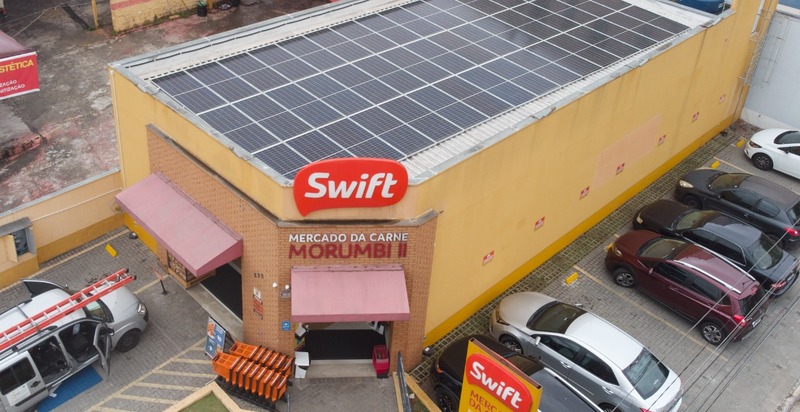
Swift, a benchmark in quality frozen food products, is taking very important step for environmental conservation: the adoption of solar energy at 100% of its network of stores in Brazil. This is a joint project with Âmbar Energy, a company of the J&F group whose operations cover energy generation and commercialization.
The initiative is already at an advanced stage of implementation, with photovoltaic panels operating at several stores. By the second semester of 2025, the entire network will be supplied with solar energy. In this phase, the program involves an investment of R$ 150 million by Âmbar Energy, responsible for operating the system.
The agreement also provides for the Swift expansion plan, guaranteeing the supply of solar energy to all the stores inaugurated by 2025. “We have drawn up a daring implementation plan because we are committed to the planet and we understand that this is a very sustainable option. Sunlight can be used abundantly in our country without affecting the environment, it is a clean, renewable energy that uses long-life, low-maintenance equipment”, says Raphael Jacob, CFO and in charge of the sustainability programs of Swift.
Besides the stores’ own roofs, micro and mini photovoltaic plants will be built at several JBS facilities and at other locations managed by Âmbar. The JBS global head office in São Paulo is one of the spaces that will receive photovoltaic panels. The electricity produced at the JBS facilities and on other solar energy farms will be operated by Âmbar.
“The partnership with Swift marks a new phase in the history of Âmbar, with investments in renewable energy and the offer of customized energy solutions that are cheaper, more sustainable and safer for clients of all sizes”, contends the president of Âmbar Energia, Marcelo Zanatta.
“The project is aligned with the sustainability strategy of JBS, which in March took on the commitment to become Net Zero by 2040, zeroing the balance of its greenhouse gas emissions”, says Raphael Jacob.
Published by: JBS Brazil