JBS Reports Record Net Sales in the Second Quarter of 2026
10 | 08 | 2026

In line with the Net Zero 2040 commitment of JBS, No Carbon will have a fleet of electric vehicles that will initially serve the logistics operations of the Friboi, Seara and Swift brands
27 | 04 | 2022
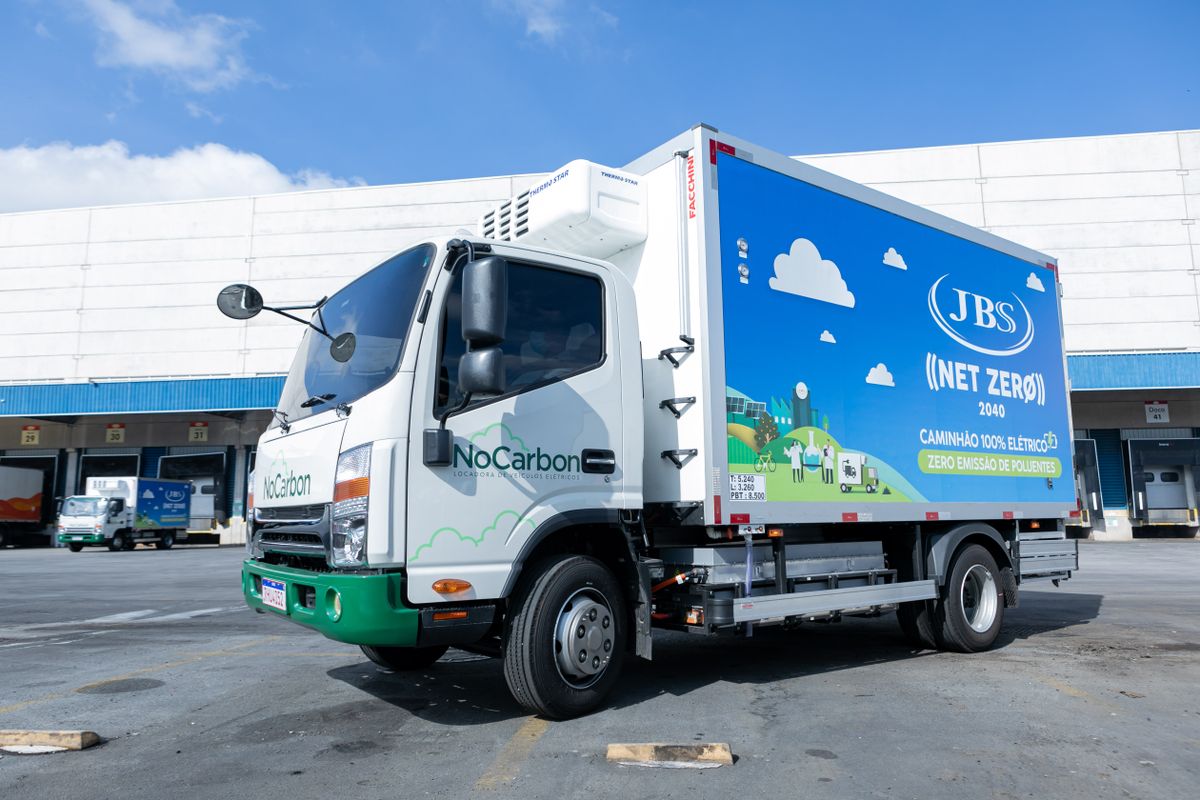
JBS, global leader in protein-based food production, is launching its newest business: No Carbon, a company specialized in leasing 100% electric trucks. In line with the commitment of JBS to be Net Zero until 2040, the new company will be part of JBS Novos Negócios and will be responsible for managing a fleet of electric refrigerated trucks. The company will initially serve JBS’s own logistics operations transactions, attending to the distribution of products of Friboi, Seara and Swift.
The electrification of the fleet used in the logistics operations of JBS will have a positive impact on the environment. Each electric truck will avert the annual emission of around 30 tons equivalent of carbon dioxide (CO2) into the atmosphere. As a result, No Carbon will directly affect the Scope 3 CO2 emissions of JBS. This is because the new vehicles will substitute the diesel models used by the Group’s providers of logistics services. Scope 3 refers to indirect emissions from a company’s operations.
No Carbon is starting its operation with fleet of 31 electric Urban Cargo Vehicles (Portuguese acronym, VUC), serving important regions of the states of São Paulo, Paraná, Santa Catarina and the Federal District. The expectation is to expand the fleet in the medium term, with the possibility of initiating the lease of electric cargo vehicles to other market players with a high demand for logistics services, like retail networks and e-commerce companies.
The truck used by No Carbon is equipped with a refrigerated box for transporting, simultaneously, chilled and frozen products and with a capacity of up to 4 tons of cargo. Recharging points will be available at the distribution centers of the brands, and the autonomy of the vehicle (with the box) is up to 150 kilometers, making it ideal for circulating in urban centers. In this way, JBS will contribute to improving the quality of the air in the main Brazilian cities in the medium term.
Besides the lower environmental footprint, one of the advantages of the electric vehicles are the low operation and maintenance costs. For example, the truck does not use air, oil and fuel filters, an exhaust system, belts, injection nozzles, injection pumps and other items that make the cost of maintaining a conventional vehicle six times higher than the electric model.
“Using No Carbon, JBS is creating a business that will scale up the use of electric trucks in cargo transportation in Brazil, a country highly dependent on the road freight transport in the logistics field. Moreover, the new approach represents the opening up of a field with tremendous growth potential and collaborates with the company’s objective of operating in an increasingly sustainable way”, asserts Susana Martins Carvalho, executive officer at JBS Novos Negócios. The initiative reflects the Company’s Net Zero commitment to zeroing the net balance of its greenhouse gas emissions by 2040 across its entire value chain.
Published by: JBS Brazil