JBS Reports Record Net Sales in the Second Quarter of 2026
10 | 08 | 2026

Gilberto Tomazoni emphasizes investing in food systems to ensure food security and combat the climate crisis
17 | 04 | 2025
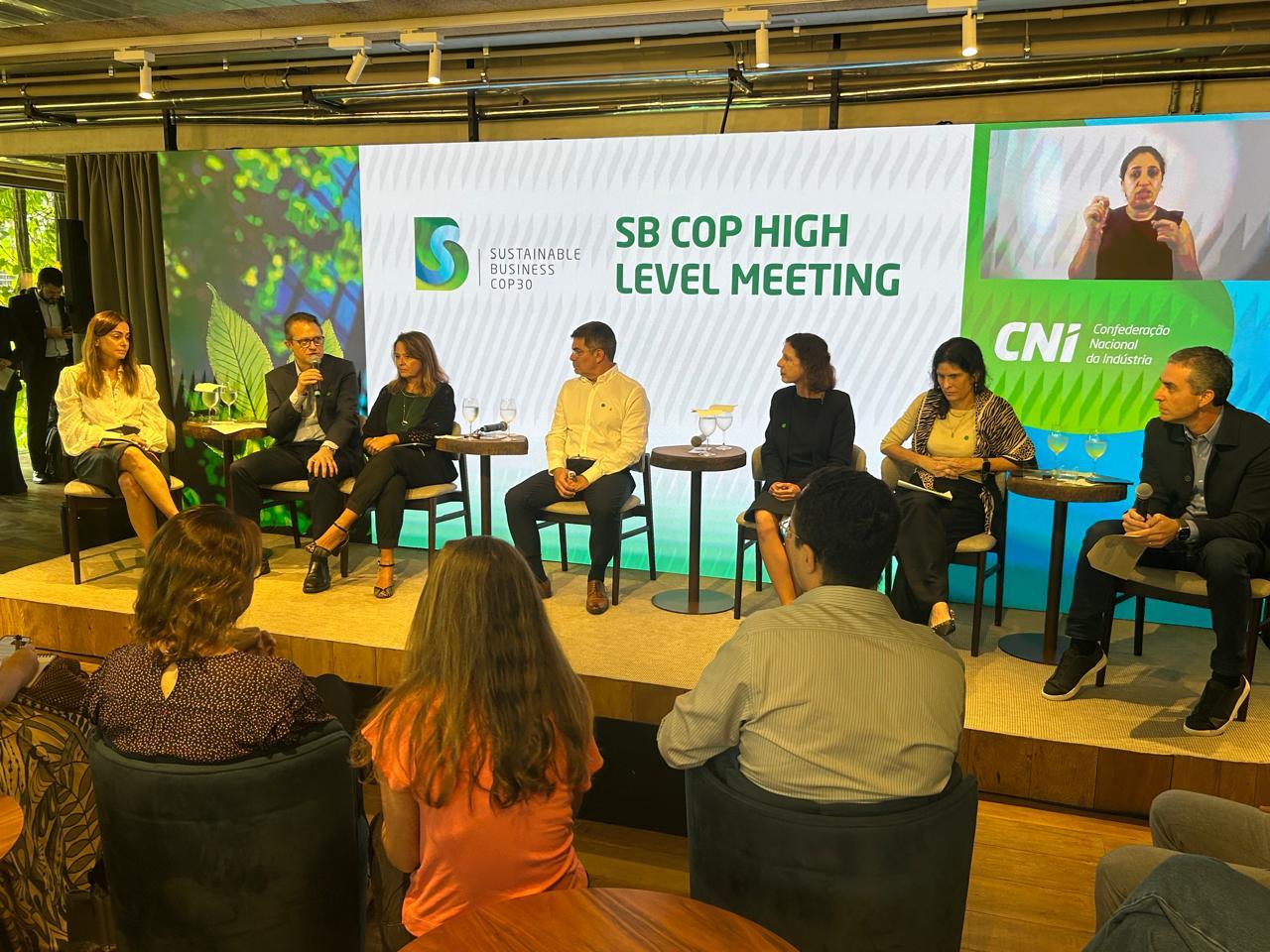
JBS Global CEO, Gilberto Tomazoni, highlighted the urgency of placing agriculture at the center of discussions on climate and food security during his participation in the High-Level Meeting of the Sustainable Business COP (SB COP), held this Thursday (17th) in São Paulo, organized by the National Confederation of Industry (CNI). As coordinator of the food systems working group, Tomazoni emphasized the need to scale existing solutions to address conflicts where hunger is one of the causes.
“We cannot treat climate and food security as separate issues. We must place agriculture at the heart of this discussion. We need to increase productivity and improve how we produce. This is essential if we want peace in the world, because there will be no peace as long as there are people hungry,” the executive stated.
Tomazoni warned about the disparity between the significance of agriculture in global emissions and the low volume of investments directed to the sector for climate change mitigation. “Currently, less than 4% of climate change investments go to agriculture, and only 1.7% of climate financing is allocated to projects in rural areas of developing countries.”
The JBS CEO cited practical examples from the company that demonstrate the potential of sustainable agriculture in Brazil, such as RestaurAmazônia, a project from the JBS Fund for the Amazon, which, in partnership with Basa (Banco da Amazônia S.A.), provides credit to small farmers in Pará, and the livestock tracking program in partnership with the state government and the NGO The Nature Conservancy (TNC), which includes the donation of 3 million tags in total. “At COP30, we will use Brazil to showcase examples. Here, there are fantastic projects that can be used and have scaled in other countries,” he explained.
To drive this transformation, Tomazoni emphasized the need to involve the entire production chain, from seeds and fertilizers to commercialization, and to develop appropriate metrics for measuring emissions and capturing greenhouse gases in tropical agriculture.
Published by: JBS Brazil